When severe microbursts bring down mature hardwoods across Buckhead residential grids or sudden water main fractures disrupt operations near Midtown and the Old Fourth Ward, standard municipal facilities quickly become…
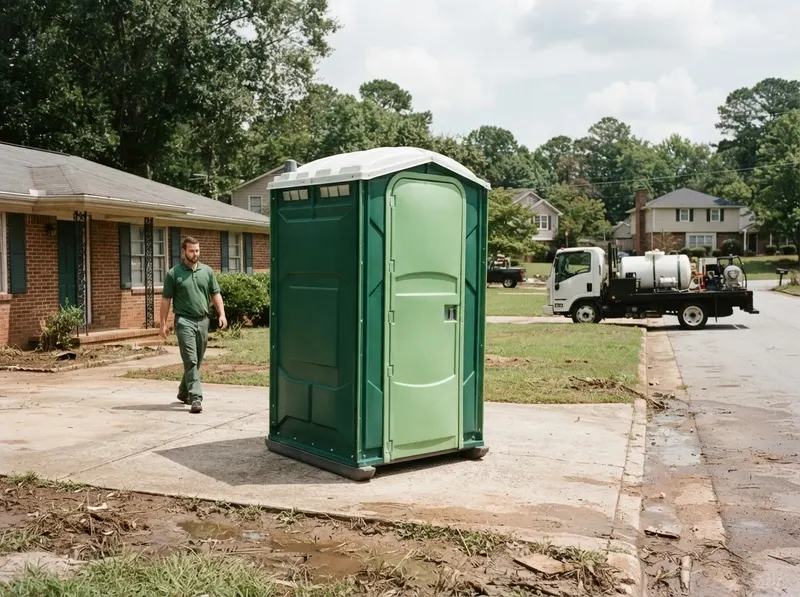
When severe microbursts bring down mature hardwoods across Buckhead residential grids or sudden water main fractures disrupt operations near Midtown and the Old Fourth Ward, standard municipal facilities quickly become non-viable. Emergency relief restrooms solve temporary infrastructure blackouts by operating entirely off-grid without requiring pressurized municipal lines or external electrical feeds. Unlike general construction rentals that follow static weekly routes, emergency deployments prioritize rapid staging along logistics corridors like Interstate 20 and Interstate 75/85, placing clean, functional sanitation directly adjacent to first-responder command tents, temporary intake shelters, or public works staging yards.
Selecting dedicated disaster relief fleets over standard commercial stock ensures higher tank capacities and more aggressive maintenance cycles. High-throughput recovery operations near Cabbagetown rail spurs, West End clearing yards, or Chastain Park recovery points produce intense site traffic that exhausts standard portables in days. Emergency-grade sanitation pairs rugged exterior shells capable of enduring storm debris with clear interior lighting surfaces and high-capacity hand-sanitizing dispensers. These units feature slip-resistant floors and balanced ventilation vents designed to prevent ambient heat and moisture buildup during extended summer emergency mobilizations across Fulton County.
Logistical precision dictates successful disaster sanitation. Our dispatch coordinators evaluate overhead tree canopy limits along residential thoroughfares in Virginia-Highland, Kirkwood, and Grant Park to guarantee that vacuum service trucks can safely enter for daily evacuation routines. Tight streets, fallen power wires, and debris piles can block 26,000-pound vacuum pump trucks; therefore, operators establish clear drop zones that maintain a maximum 30-foot reach between the service truck's suction hose and the relief unit's holding tank. Every deployment remains backed by clearly defined pump-out manifests, eliminating unexpected disposal charges or missed sanitation windows during critical operations.
Every job gets a firm, written price after a free on-site visit.
Tell us about your disaster & emergency relief restrooms job in Atlanta and we'll send a clear, written quote, usually the same day.
 ClearPine Portable Toilets